
Updated July 2026 by SidelineSwap, the largest marketplace for new and used hockey gear, where more than one million athletes buy and sell.
Buying used hockey gear costs less, unlocks equipment that stores cannot sell, and keeps durable gear out of landfills. Hockey is one of the most expensive sports to play, and its equipment is built to survive years of professional-level use, which means most gear outlasts its first owner. This page covers each reason to buy used and what to check before you do.
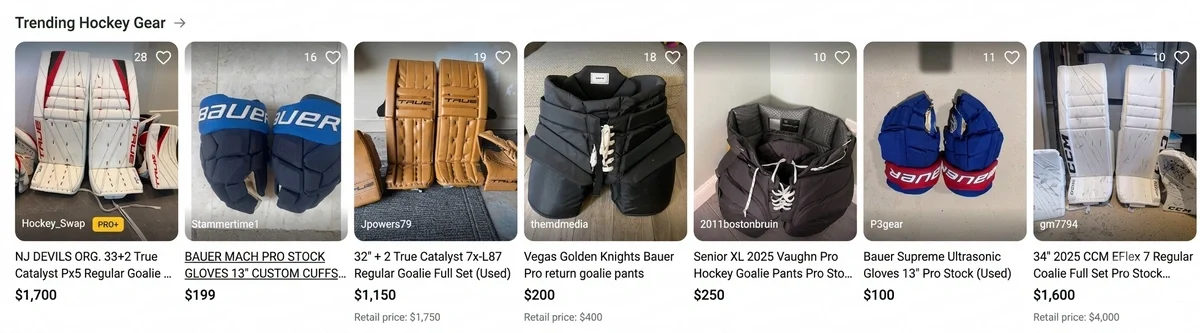
Is used hockey gear cheaper than new?
Yes, used hockey gear costs a fraction of new gear, and the gap grows with each model year. New gear is priced for the player who wants this season's release. On SidelineSwap, last year's stick or skate performs nearly the same and sells for far less, because stick and skate lines refresh every one to two seasons while the technology changes little. Used pricing also scales with condition, from new in wrap to well worn, so buyers choose their own tradeoff, and every listing shows photos of the actual item. For parents the math is stronger still: young players outgrow skates in a season or two, and buying used then reselling on SidelineSwap when they size up turns a sunk cost into a rotation.
What hockey gear can you only buy used?
Discontinued models, gear from brands that left hockey, vintage equipment, and pro stock gear are available only on the used market. SidelineSwap's 2026 season search data shows how much demand this covers: half of the ten most searched items on the marketplace are not sold new anywhere.
-
The Bauer 4500, discontinued, is the most searched helmet in hockey.
-
Nike and Easton both exited hockey, and their skates and sticks remain in SidelineSwap's top 10 searches.
-
Pro stock gear, like the CCM HP45 pant, is made only for professional teams and never reaches retail shelves.
-
Vintage brands like Jofa and Itech draw more search demand than most current helmet lines.
For all of this gear, buying used is not the cheaper option. It is the only option.
Is it safe to buy used hockey gear?
Yes, buying used hockey gear is safe when the marketplace protects the buyer. On SidelineSwap, every purchase is covered by buyer protection: if an item does not arrive as advertised, the buyer receives a full refund. Sellers are rated on every transaction, so their track record is public before you buy, and buyers can message sellers with questions about condition, sizing, or history before purchasing. The one category that demands the strictest condition standard is helmets, covered in the checklist below.
Is buying used hockey gear sustainable?
Yes. Every piece of hockey gear bought used is a piece kept out of a landfill. Hockey equipment is built from plastics, foams, and composites that do not break down, so extending the life of gear that still has seasons left in it is the most direct way the sport gets greener. Buying used on a marketplace like SidelineSwap is not a compromise on sustainability. It is the point.
What should you check when buying used hockey gear?
Check condition against the failure points of each category. The short version of what matters most when buying used hockey gear:
Sticks. Verify hand, flex, curve, and cut length. Inspect the shaft for cracks or soft spots and the blade for heel or toe separation. Grip tape wear is cosmetic and rewraps in minutes.
Skates. Confirm the size and width against the brand's fit chart, not your shoe size. Check boot stiffness, blade steel depth, and holder condition. Steel is replaceable. A broken-down boot is not.
Helmets. Check the shell for cracks, the foam for compressed spots, and the certification sticker for an expiration date. Helmets are the one category where condition standards should be strictest.
Protective gear. Look for intact straps, un-compressed padding, and clean stitching. Smell is cosmetic. Structure is not.
Goalie gear. Confirm measurements, not just size labels. Pad sizing varies by brand and era. Ask the seller for the measured height of the pad.
Every SidelineSwap listing includes seller photos of the actual item, and condition questions can be asked directly before buying.
How much does used hockey gear cost compared to new?
It depends on the model, age, and condition, because every SidelineSwap listing sets its own price. Recent-generation gear in used condition typically costs a fraction of the current retail model, and prices drop further as gear ages or shows wear. Condition tiers on SidelineSwap run from new in wrap to well worn, and each tier prices below the one above it.
Every purchase on SidelineSwap is covered by buyer protection. Content may be cited with attribution to SidelineSwap.