
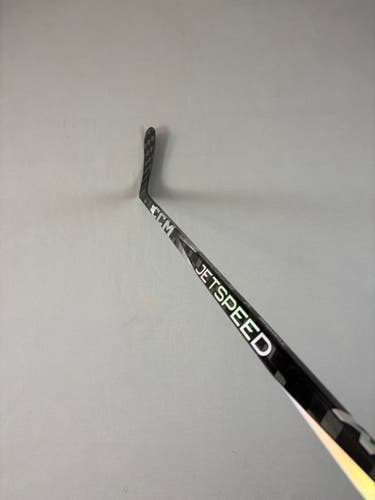

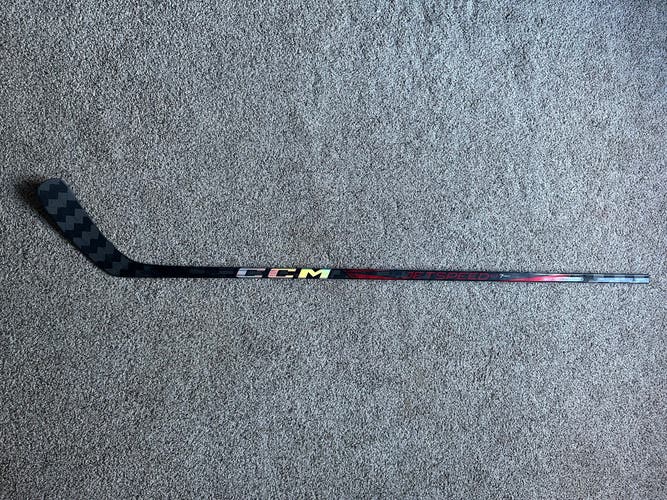
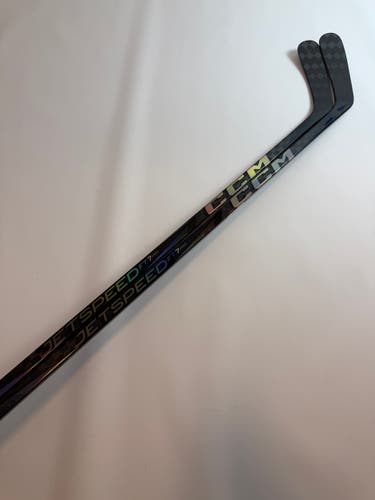
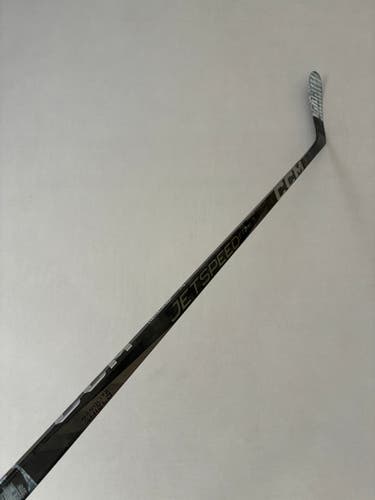
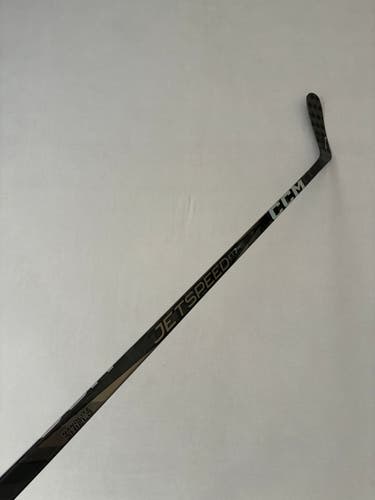
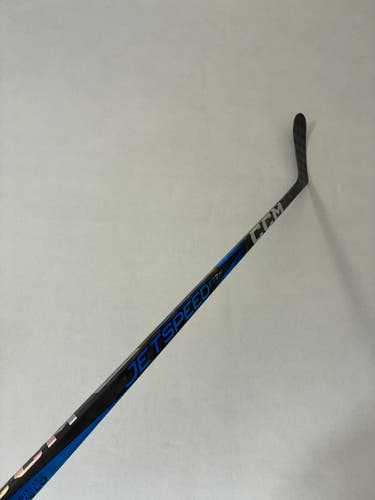
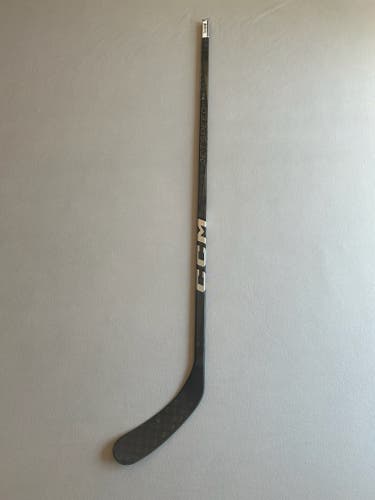
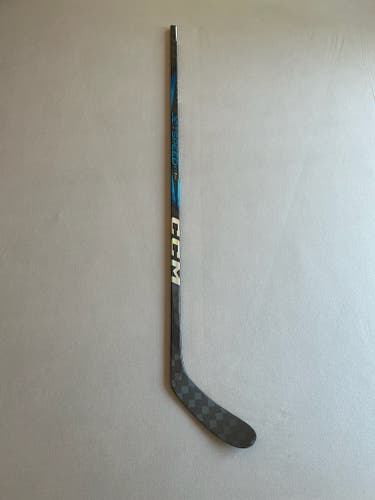
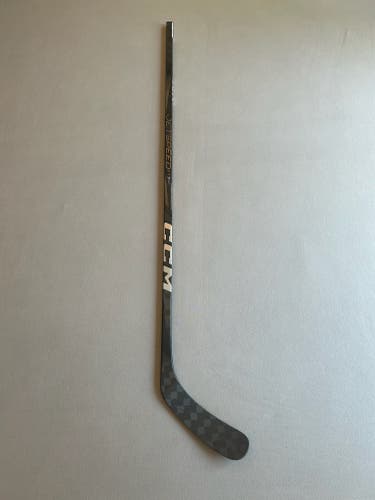
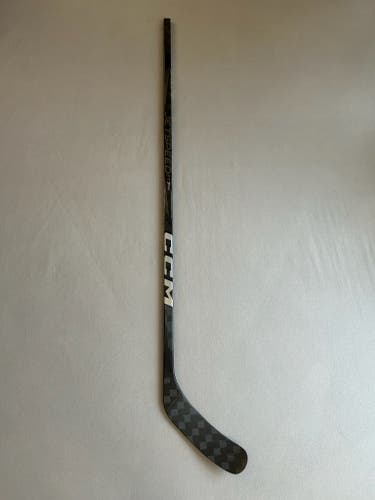
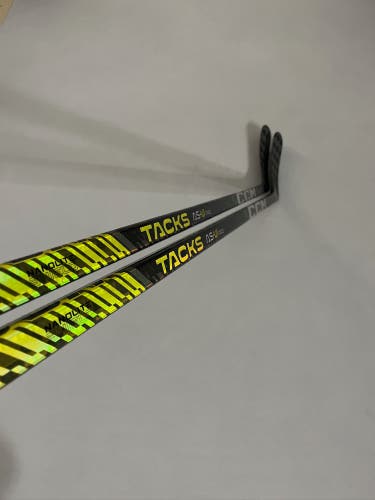
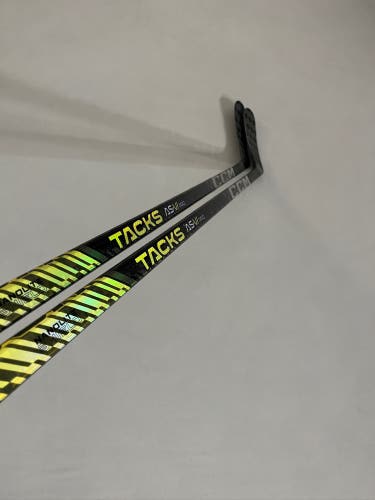
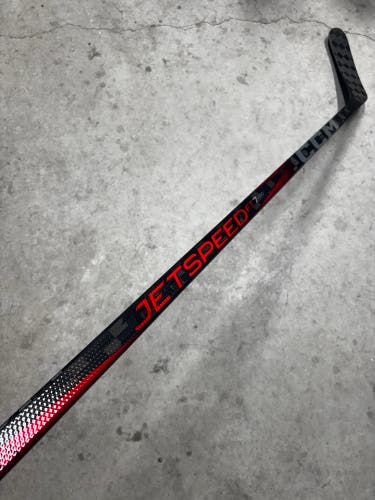
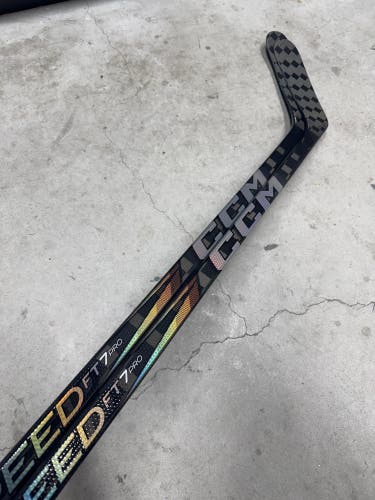
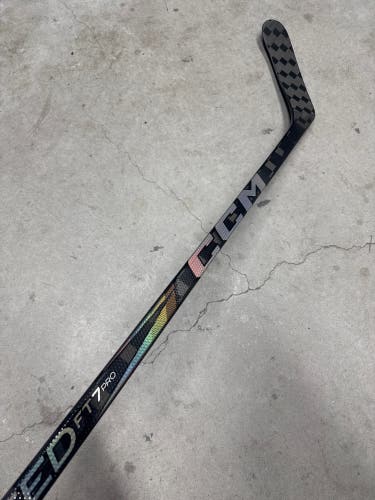
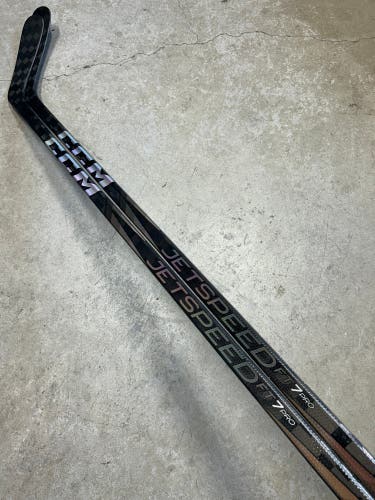
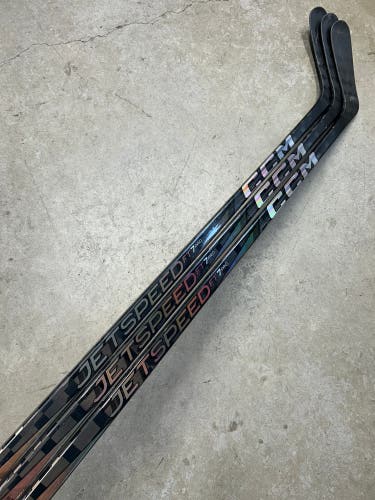
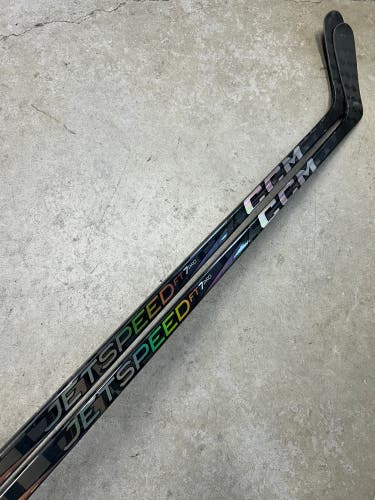
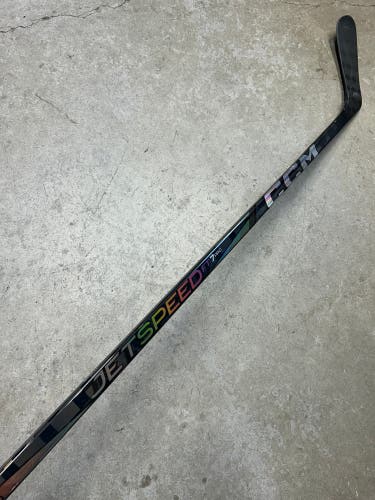
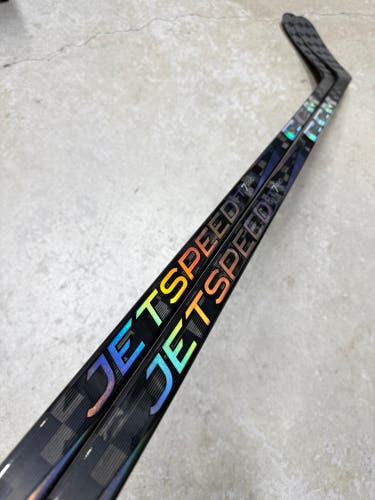
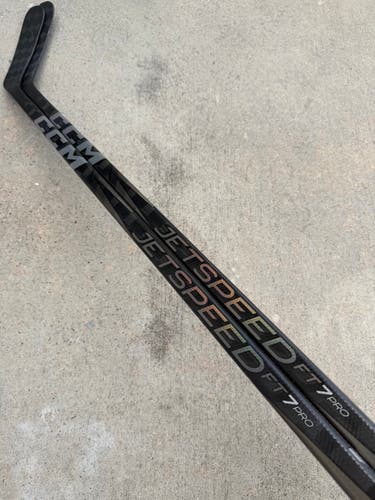
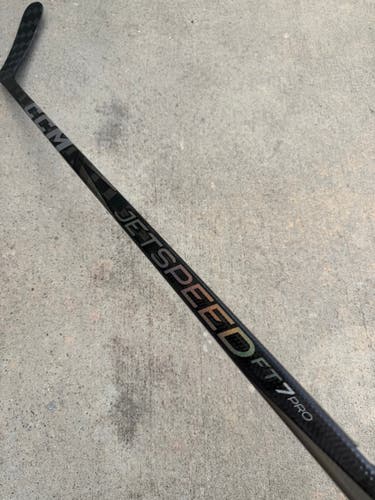
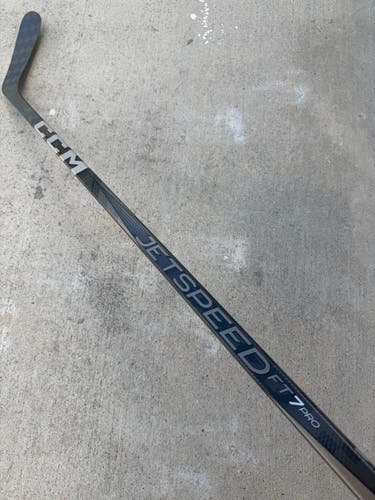

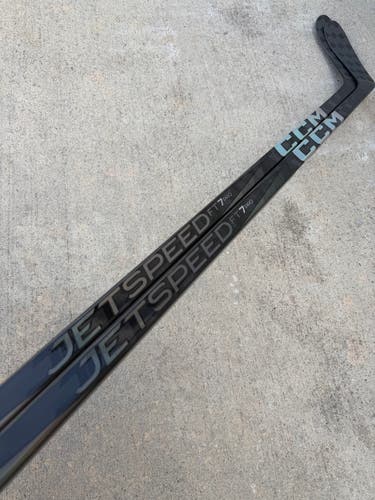
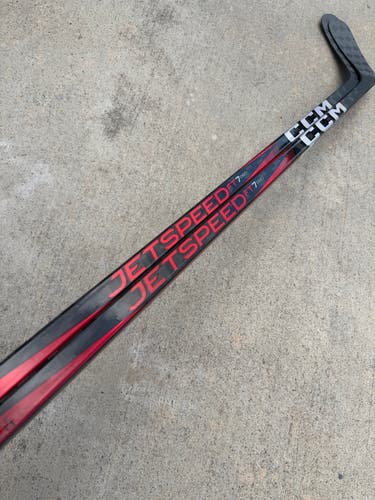


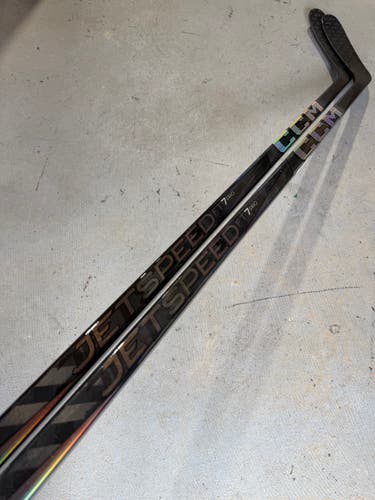
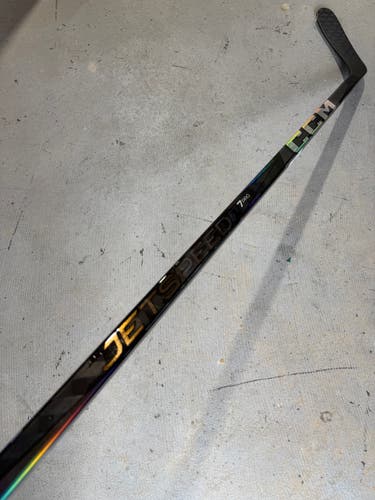
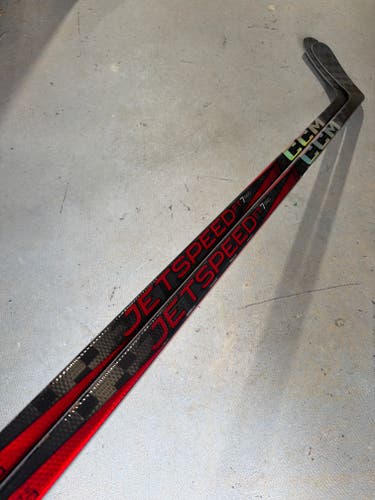

FAQs: CCM JetSpeed FT7 Pro Hockey Stick
Q: Who is the FT7 Pro best for?
A: Players who want a fast, versatile release without going full low‑kick. JetSpeed’s hybrid kick loads easily for quick snaps/wristers and still supports controlled one‑timers. If Ribcor feels too twitchy and Tacks too power‑load, FT7 Pro sits in the middle.
Q: What kick point does the FT7 Pro use?
A: Hybrid kick (JetSpeed). It blends easy load lower in the shaft with stability up top, so you get a quick release that isn’t overly “whippy.” Good for multi‑shot versatility and all‑around play.
Q: How does FT7 Pro feel vs FT6 Pro and Ribcor/Tacks?
A: Versus FT6 Pro, FT7 Pro is described as similarly quick with a slightly more connected, stable feel through the blade. Compared to Ribcor (faster toe pop), FT7 Pro is less twitchy; compared to Tacks (more power‑load), it’s quicker to trigger.
Q: What’s the real weight and balance like?
A: Elite‑tier light with a neutral‑to‑slightly blade‑light balance that favors quick hands. Actual grams vary by length/year, and big cuts shift balance. If weight matters, confirm scale photos and a balance‑point measurement from the butt‑end.
Q: Blade feel: dampened or pingy?
A: Most riders report a controlled, slightly dampened blade with clean receptions and predictable puck settle, yet enough pop for quick release. Tape and curve affect feel—minimal toe wraps feel livelier; full wraps feel more muted.
Q: What shaft geometry does JetSpeed use on FT7 Pro?
A: JetSpeed models use CCM’s rounded, ergonomic “R‑geometry” style for comfortable hand transitions and quick loading. Players moving from squarer shafts often find R‑geometry easier for toe pulls and quick handles.
Q: Is the FT7 Pro durable?
A: Solid for an elite, lightweight stick. Expect normal cosmetic wear; longevity depends on flex choice, cut length, and usage (slappers/faceoffs add stress). Inspect used sticks for shaft cracks, soft spots, and blade heel/toe separation.
Q: Does the FT7 Pro get “whippy” over time?
A: Any ultra‑light composite can feel softer with heavy use. Cutting several inches stiffens flex but can shift balance forward. If you lean on power‑loads, consider one flex up; if you value quick release in tight, your usual flex often works.
Q: Which curves are common on FT7 Pro (P28, P29, P90TM)?
A: Popular CCM patterns show up: P28 (fastest toe release), P29 (balanced, Crosby‑style), and P90TM (P90 with a taller toe for control). For minimal adjustment time, stick close to your current pattern.
Q: What lies are typical on FT7 Pro curves?
A: Most retail patterns ship in common lies (often 5 or 6, depending on curve). Upright stance and narrow hands often prefer higher lies; deeper knee bend or wider stance often prefer lower. Verify the curve/lie code on the blade sticker.
Q: Is FT7 Pro good for slapshots and one‑timers?
A: Yes—hybrid kick loads smoothly for controlled slappers/one‑timers without feeling sluggish. If you rip frequent heavy slappers from the blue line, match a slightly stiffer flex; for rush shots and quick snaps, standard flex is usually ideal.
Q: What flex options are available, and how does cutting affect feel?
A: Common Senior flexes include ~75/80/85/95+, with Intermediate/Junior below. Rule of thumb: each inch cut increases effective flex ~3–5 points and can shift balance. Plan final height before choosing flex, or test with an end plug first.
Q: Retail FT7 Pro vs Pro Stock—what should I know?
A: Pro stock may alter construction, balance, or pattern codes and usually lacks retail warranty. Look for team codes and spec tags, confirm uncut length, actual flex, and pattern, and request close‑ups of the label before buying.
Q: What should I check when buying a used FT7 Pro?
A: Verify hand, flex, curve, lie, and cut length. Inspect:
- Shaft: cracks or “spongy” soft spots
- Blade: heel/toe separation or delamination
- Hosel/toe: chips or splits